What Valid Tracking Rate Means for Amazon Sellers
Valid Tracking Rate Amazon, or VTR, is one of the metrics Amazon watches closely to judge how reliable your shipping process is. It shows how often you provide tracking numbers that Amazon can verify through an approved carrier. When this number stays strong, Amazon sees your business as stable. When it dips, Amazon sees a risk.
The idea behind VTR is simple. Amazon wants customers to feel confident about their orders from the moment they leave your warehouse. If a buyer cannot follow the package, trust drops quickly. A small mistake with tracking does not look like much on your end, but on Amazon’s side, it appears as a possible delivery problem.
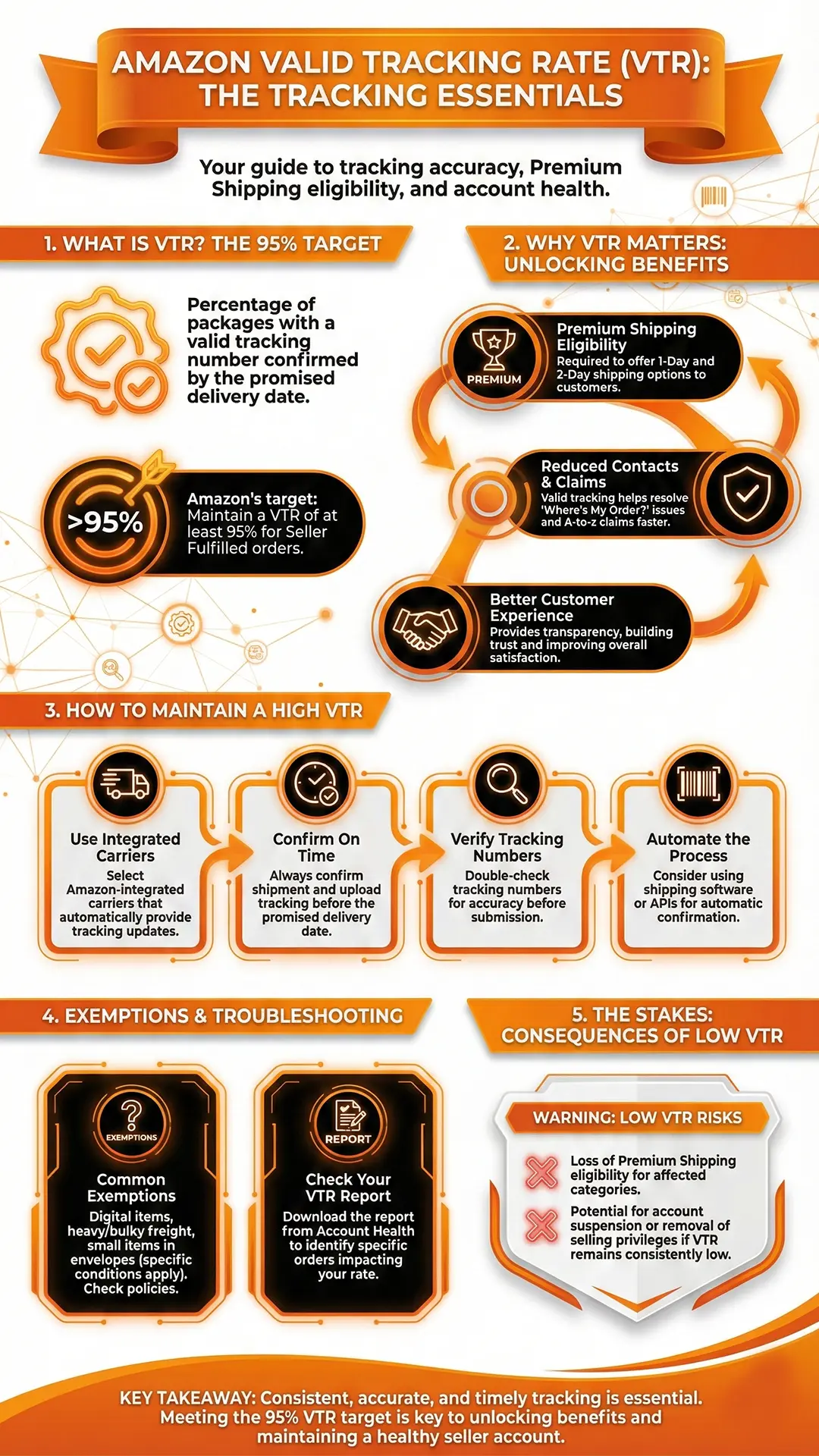
Amazon expects sellers to keep VTR above ninety five percent. That benchmark applies to most FBM and MFN orders. If your numbers fall below that line, Amazon steps in with warnings or limits your ability to ship certain products. But no issues if you’re at Amazon Account Reinstatement Service we can help you.
Why Amazon Cares About Valid Tracking Rate
Tracking does more than show where a package is. It helps Amazon reduce customer complaints, A to Z claims, and refund requests. When tracking updates are missing or inconsistent, customers get nervous and Amazon gets pulled into the conversation.
Valid tracking also protects the marketplace. Amazon wants buyers to trust that sellers ship items the way they promise. When too many orders show invalid tracking, Amazon sees it as a sign that the seller’s workflow is not consistent. That is why VTR affects account health directly.
At the same time, clear tracking reduces the amount of customer support Amazon must handle.
When buyers can check their tracking themselves, they send fewer messages and file fewer claims. Amazon rewards sellers who make this experience smooth.
How Amazon Calculates Valid Tracking Rate
The calculation behind VTR is straightforward. Amazon takes the number of orders with valid tracking and compares it with the total number of shipped orders. The percentage reflects how often you provide trackable shipments that meet Amazon’s requirements.
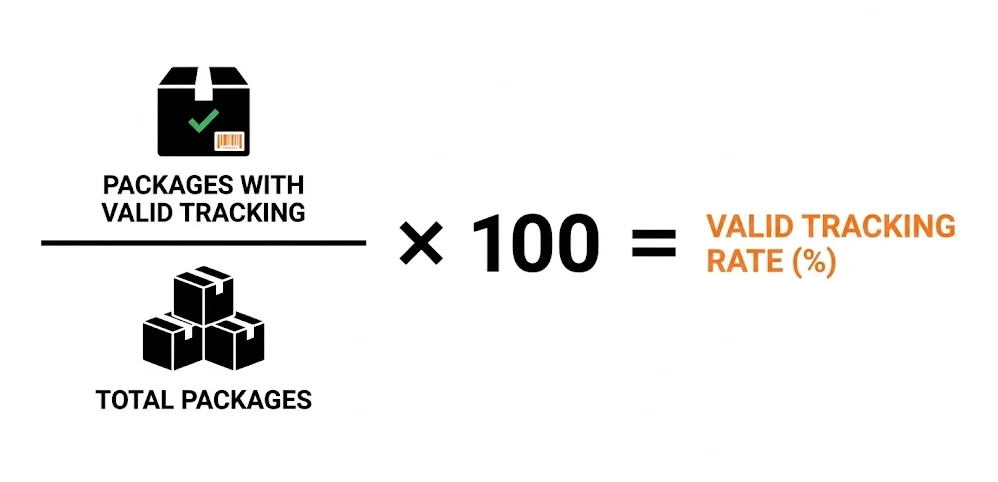
For tracking to be considered valid, three things must happen. The tracking must be uploaded on time, it must come from a carrier Amazon approves, and it must show at least one real carrier scan. If even one of those steps is missing, the tracking becomes invalid.
Amazon measures VTR at the category level. That means you might see issues in one part of your catalog while everything else looks fine. If problems repeat in a single category, Amazon may step in and restrict that category until your numbers improve.
It is also important to know that VTR is not the same as delivery speed. A package can arrive on time but still count as invalid if the tracking number never showed a proper scan. Amazon is measuring accuracy, not timing.
What Amazon Considers Valid Tracking
For a tracking number to count, Amazon needs to see it come from a recognized carrier. Approved carriers share electronic tracking data with Amazon. This is how Amazon confirms the package actually entered the carrier network.
The tracking must also match the ship from address that you have in Seller Central. If the address on the label does not match your settings, Amazon’s system may not be able to validate the shipment. This often happens when sellers switch warehouses or use a prep center without updating their information.
Tracking must be entered before the package is picked up. If you upload it late, Amazon might never see the first scan, which makes the tracking appear incomplete. Even though the item may arrive on time, Amazon needs the early scan for the shipment to count.
Custom carriers, handwritten tracking numbers, and reused labels almost always fail these requirements. Amazon relies on digital confirmation, not manual updates.
Why Valid Tracking Rate Matters for Account Health
VTR strongly influences your performance metrics. When it stays high, Amazon sees your business as reliable. When it drops, Amazon assumes your shipping process has gaps that affect customers.
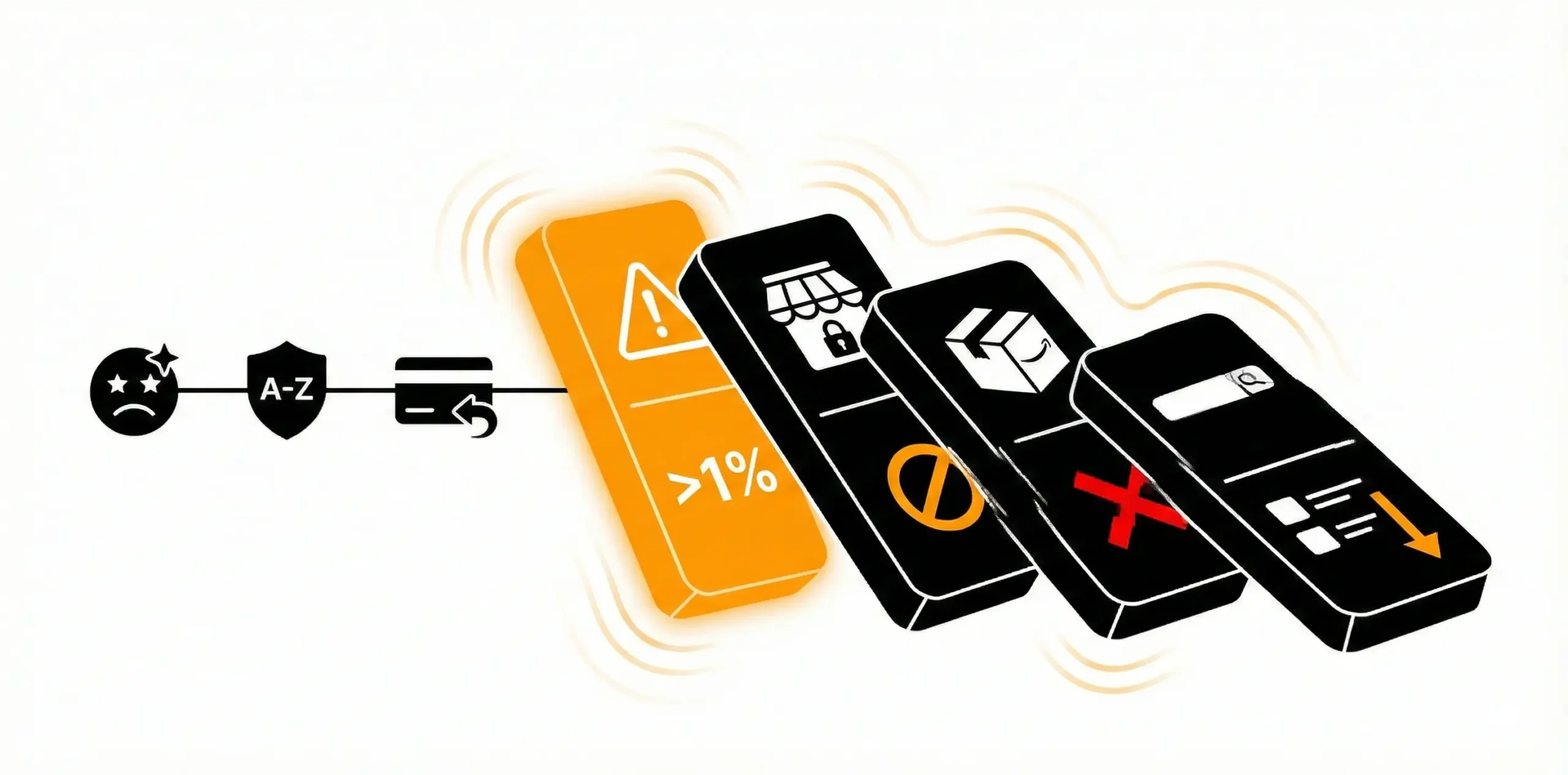
A low VTR has several consequences. Your Buy Box share may drop, your listings may appear less often in search results, and you may receive warnings that require immediate attention. In categories where customers expect fast delivery, Amazon may even restrict your ability to ship through FBM until you correct the issue.
If the pattern continues over time, Amazon may review your account more frequently. Repeated VTR issues can eventually lead to category suspensions or full account deactivation. This is why sellers monitor VTR daily rather than waiting for a notification.
Read more about other important amazon seller performance metrics here.
Common Reasons Sellers Fail the Valid Tracking Rate Requirement
Most VTR problems come from small mistakes in the fulfillment process. These issues often look minor at first but can cause repeated tracking failures inside Amazon’s system. When enough of these failures appear in a short period, VTR drops below the required threshold.
Late Uploading of Tracking Numbers
Amazon expects tracking to be uploaded on time so buyers can see movement immediately. When tracking is added after the package is already in transit, Amazon may not detect the first scan. Without that initial scan, the tracking number is marked as invalid even if the delivery is on time.
Using Carriers That Are Not Approved by Amazon
Amazon only recognizes certain carriers. If you use a local service or a regional courier that is not in Amazon’s approved list, the tracking number will fail. Sellers sometimes choose cheaper shipping methods, but this often leads to invalid tracking.
Incorrect or Invalid Tracking Numbers
A typing error, a missing digit, or reusing an old tracking number will cause an immediate failure. Amazon’s system checks tracking numbers automatically, and any number that does not match a real shipment gets flagged.
Tracking Numbers With No Carrier Scans
Packages that do not receive a physical scan from the carrier show up as invalid in Amazon’s system. This can happen when packages are dropped off without proper handover, the carrier misses the first scan, or the label is unreadable. Even though the item may be delivered, Amazon cannot confirm the shipment without a scan.
Ship From Address That Does Not Match the Registered Location
If the address on your tracking does not match the address Amazon has on file, the system may fail the tracking number. This is common when sellers ship from multiple warehouses or use third party logistics without updating their settings.
Orders Fulfilled Manually Without Carrier Integration
When tracking numbers are created manually instead of through an integrated system, they are more likely to be incorrect or missing scans. Amazon prefers electronic tracking because it reduces errors and improves visibility.
Issues Related to Prepaid Labels or Custom Shipping Options
Prepaid carrier labels from unsupported carriers or manually generated labels sometimes fail to provide proper digital updates. These orders often become invalid even when the shipment reaches the customer.
What Happens When Your Valid Tracking Rate Drops
Amazon monitors VTR closely because it protects customer trust. When your VTR falls below the required level, Amazon responds quickly. The more extreme the drop, the stronger the action.
Category Level Restrictions
Amazon may restrict your ability to sell in certain categories. For example, if your VTR is low in electronics or health and household, those categories may be paused while others stay active. This limits your sales potential and can affect your revenue significantly.
Loss of Self Fulfilled Shipping Privileges
Amazon may remove your ability to ship orders yourself. When this happens, you must switch those listings to FBA or keep them inactive. Sellers who rely on FBM often feel this impact immediately.
Reduced Buy Box Share
A low VTR reduces your chances of winning the Buy Box. Amazon will not give the Buy Box to sellers who show inconsistent shipping behavior because it increases the risk of late deliveries and customer dissatisfaction. Even a small drop in Buy Box share can reduce your daily sales.
Account Health Warnings
Amazon sends warnings through the Account Health dashboard when your VTR is close to or below the required threshold. These warnings are a sign that you must fix your shipping workflow quickly. If the trend continues, you may receive a formal performance notification.
Listing Deactivations
For repeated VTR problems, Amazon may deactivate individual ASINs. These deactivations are often tied to categories where customers expect strict tracking accuracy.
Higher Risk of Account Suspension
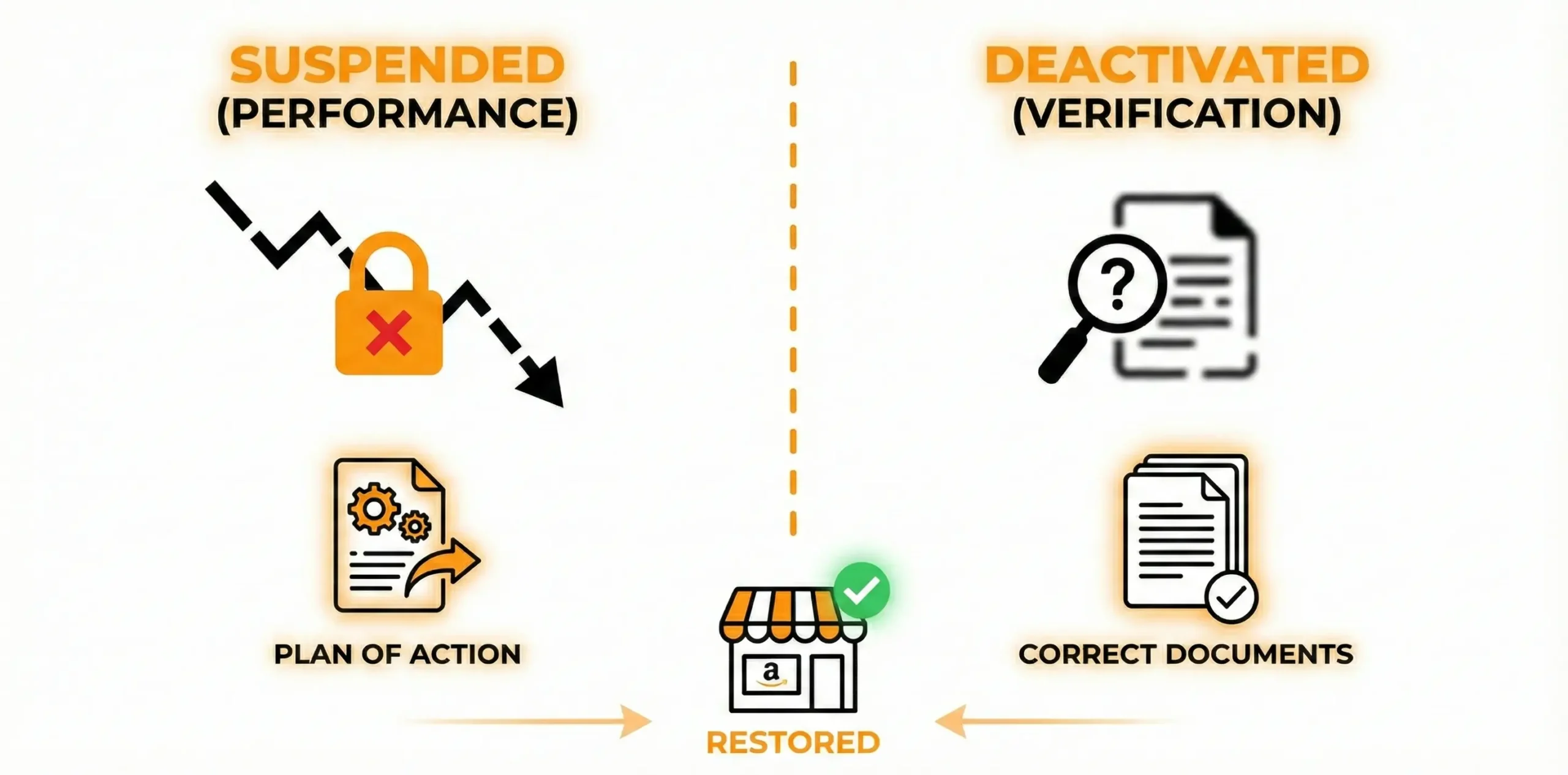
VTR issues that repeat over several evaluation periods can lead to full account suspension. Once Amazon sees a pattern, they consider the seller unreliable. At that point, reinstatement requires a strong appeal with a clear explanation of the root cause and the steps taken to fix the problem.
How Valid Tracking Rate Affects Your Amazon Visibility and Sales
VTR does more than impact your account health. It directly influences your ability to rank, advertise, and convert customers.
Lower Search Ranking
Amazon gives priority to reliable sellers. When VTR drops, Amazon reduces exposure for your listings. This means fewer impressions and fewer organic clicks. Even if your product is competitive, poor tracking performance can push it far down the search results.
Slower Sales and Higher Advertising Costs
If buyers cannot trust your shipping history, conversions drop. Lower conversions signal to Amazon that your listing is underperforming, which makes your ads less efficient and raises your cost per sale.
More Customer Complaints
Customers who cannot track their packages often reach out for help or file claims. These complaints can affect both your ODR and your customer support metrics.
Loss of Customer Trust
When tracking updates are inconsistent, customers remember. Repeated issues can lead to more negative feedback, which affects long term brand reputation.
Bringing Your Valid Tracking Rate Back Up
When your VTR begins to slip, the best way to turn it around is by fixing the small issues that show up in day to day fulfillment. Amazon’s system reacts to patterns, so once you address the real cause, your numbers usually start improving quickly.
Use Carriers Amazon Accepts
If you want your tracking to count, make sure the carrier is on Amazon’s approved list. Some regional or budget carriers look attractive, but their tracking does not always sync with Amazon. That alone can pull your VTR down even when the package arrives on time.
Add Tracking as Soon as Orders Are Ready
Tracking should be uploaded right after the label is created. When tracking is added late, Amazon sometimes misses the first scan and marks it invalid. This is one of the most common problems sellers face, and the solution is simply updating tracking sooner.
Double Check the Number Before Uploading
A small typing mistake is enough for Amazon to reject the tracking number. Before uploading, take a moment to confirm that the number matches the carrier label. It takes a few seconds but prevents repeated defects.
Make Sure Packages Are Scanned by the Carrier
Tracking cannot show movement without a proper scan. If your packages are dropped off in bulk or the carrier does not scan them right away, the shipment may look inactive to Amazon. You can ask for a pickup receipt or manifest so you have confirmation that each package was accepted.
Clean Up Ship From Addresses
If your tracking shows a different origin than what Amazon expects, the system may flag it as invalid. This happens often when sellers switch warehouses or use a prep center without updating their settings. Keeping your addresses accurate is an easy fix.
Avoid Reusing Old Tracking Labels
Reusing prepaid labels or old tracking numbers almost always leads to invalid tracking. Each shipment needs its own label so Amazon can match the package correctly.
Use a Shipping Tool That Syncs With Amazon
Tools that connect directly to Amazon reduce mistakes by automatically sending tracking right after the label is created. This removes the need for manual input, which is where most errors begin.
Long Term Habits That Protect Your Valid Tracking Rate
Once your VTR is stable again, the next goal is preventing it from dropping in the future. A few simple routines can keep your numbers steady even during busy months.
Create a Consistent Fulfillment Workflow
Your workflow should make it hard to make mistakes. Pack orders the same way every day, verify labels before applying them, and have one clear step for uploading tracking. When the process is consistent, fewer errors slip through.
Set Practical Shipping Cutoff Times
If orders come in late and you feel rushed to ship them, tracking mistakes become more likely. A realistic cutoff time helps keep your workflow steady and ensures tracking is uploaded while the package is still at your location.
Watch Your Inventory Levels
Inventory issues often lead to shipping delays or last minute changes that affect tracking. Keep stock updated and avoid situations where you must ship from a different address without adjusting your settings.
Move Sensitive SKUs to FBA
If certain items cause repeated VTR problems, sending them to FBA may reduce the risk. Amazon manages tracking for FBA orders, which removes a major source of invalid scans.
Train Anyone Who Helps You Ship
If you have staff or a warehouse partner, make sure they understand Amazon’s tracking rules. Many VTR issues come from someone on the team not knowing how strict Amazon is with tracking data.
Fixing Valid Tracking Rate Warnings
If Amazon sends a warning about VTR, they want to see that you understand the problem. Your response should explain:
- what caused the invalid tracking
- what you fixed immediately
- how you will prevent it from happening again
Amazon is not looking for a long explanation. They want a clear, honest overview that shows you have control over your shipping process. Once they see that you addressed the issue, your account usually stabilizes.
How to Avoid Future VTR Problems
The best way to stay above the VTR threshold is to keep an eye on your tracking every week. Regular checks help you notice patterns before Amazon flags them.
A simple checklist can prevent most VTR issues:
- confirm packages are scanned at pickup
- keep address settings updated
- avoid changing carriers without checking Amazon’s approved list
- review tracking failures in Account Health
- make sure team members follow the same workflow
These habits sound small, but they help keep your tracking clean and predictable.
How AAR Services Helps Sellers With Tracking Issues
If your VTR dipped repeatedly or Amazon already sent you warnings, AAR Services can walk you through the reason behind the problem. We look at your tracking reports, your workflow, and your carriers, then point out the areas that need attention.
With our help, sellers receive:
- a full review of their tracking performance
- clear steps to correct invalid shipments
- guidance on approved carriers
- workflow improvements
- help preparing responses for Amazon
Tracking problems grow quickly if they are not fixed. Having the right support makes the process easier and helps protect your account health.
Final Thoughts
Valid Tracking Rate Amazon may look like a simple number, but it affects nearly every part of your Amazon business. When tracking works smoothly, buyers feel more confident, your listings perform better, and your account becomes more stable. Keeping VTR above the required level is not difficult when you build routines that prevent mistakes before they happen.
If you ever feel unsure why your tracking rate dropped or what Amazon wants to see in a response, AAR Services can guide you through the steps and help you get things back on track.