The Late Shipment Rate plays a major role in your performance as an Amazon seller. Amazon tracks how quickly you confirm shipments, and even a small delay can affect your visibility, Buy Box chances, and overall account health. Many sellers underestimate this metric until it becomes a real problem. This guide from Amazon Account Reinstatement Service can help you understand how LSR works is the first step to keeping your account safe and your customers satisfied.
Amazon expects sellers to maintain a Late Shipment Rate below four percent. This might look simple, but if you manage a busy operation or handle shipping manually, the numbers can climb faster than expected. Once your Amazon late shipment rate crosses the limit, Amazon notices it right away and may issue warnings or restrict your ability to sell.
What Is the Amazon Late Shipment Rate?
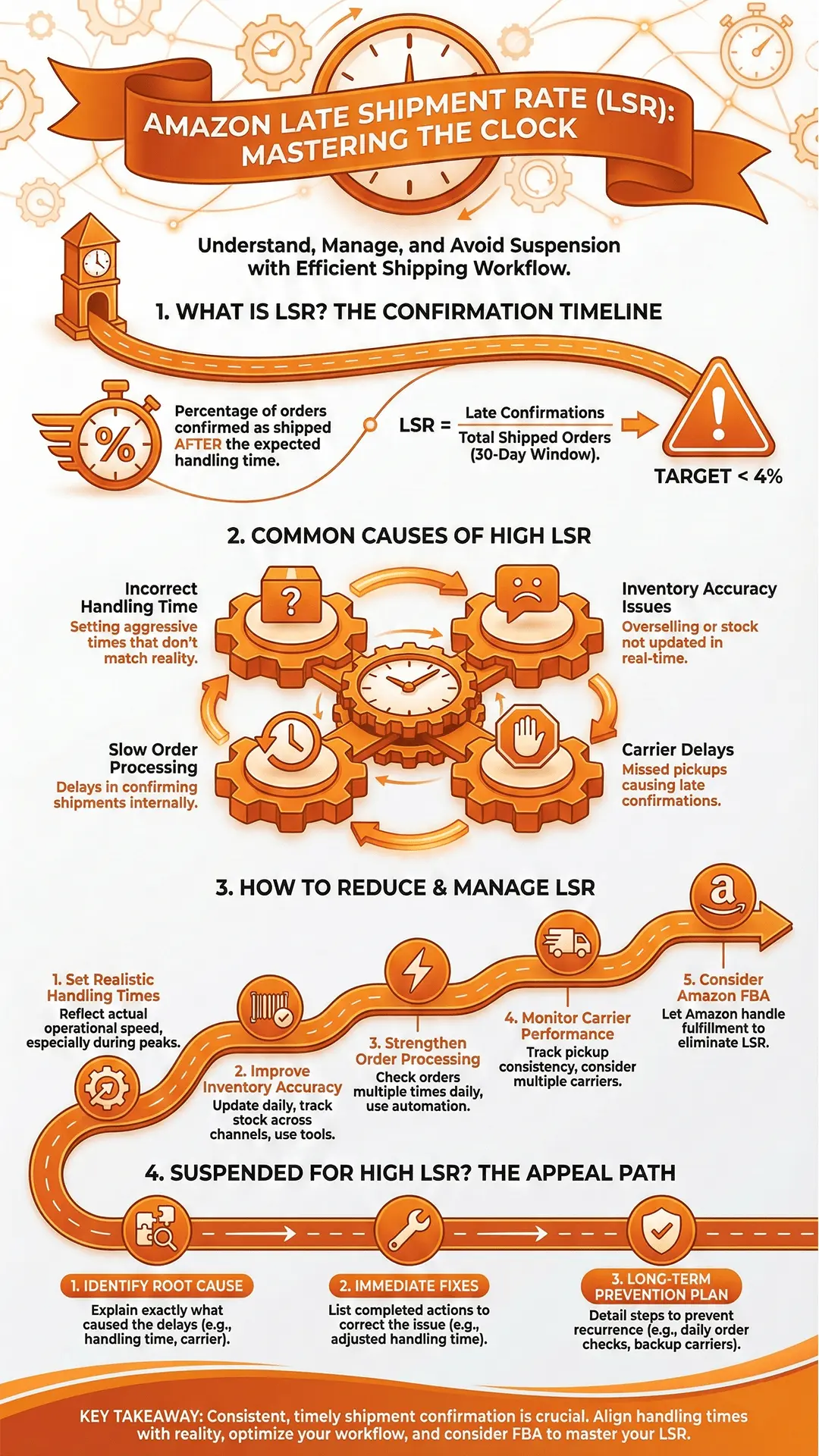
The Late Shipment Rate measures how many of your orders were confirmed as shipped after the expected handling time. Amazon calculates this based on the moment you mark an order as shipped inside Seller Central. It does not track when the carrier actually picks up the item or when the package reaches the customer.
If you confirm an order too late, even by a few hours, Amazon counts it as a late shipment. Once your LSR hits four percent or higher, the risk of account warnings and suspensions increases.
How Amazon Calculates LSR
Amazon compares the number of late confirmations to your total number of orders over the past 30 days. The formula is simple:
- Total late-confirmed orders
- Divided by total shipped orders
- Measured over a rolling 30-day window
This helps Amazon measure the consistency of your operation, not just occasional delays.
Most sellers confuse late shipment with late delivery, but Amazon sees them differently. Your LSR is based only on when you confirm the order inside Seller Central.
Shipment vs Delivery (Why It Matters for LSR)
A lot of sellers believe that delivering the item late affects Amazon late shipment rate, but it doesn’t. Delivery delays affect customer feedback, but not the LSR metric. What matters to Amazon is the timestamp when you clicked “Confirm Shipment.”
A shipment is considered late if:
- You mark it as shipped after the handling time expires
- The wrong handling time was set
- The order sat in pending status without action
Delivery time is separate and does not change your Amazon late shipment rate.
Handling Time vs Late Shipment Rate
Handling time plays a major role in your LSR performance. Your handling time is the window Amazon expects you to prepare the item and confirm the shipment. If your team needs two days to pack and ship orders but your listed handling time is one day, your LSR will rise quickly.
Handling Time
Handling time is how long it normally takes you to prepare an order. You control this setting. Sellers who misjudge their handling time often see unexpected Amazon late shipment rate spikes.
Late Shipment Rate
LSR is the percentage of orders confirmed late. This is not controlled by delivery times, only by the timestamp of your shipment confirmation.
Keeping both aligned ensures you avoid unnecessary late shipment flags.
Why the Late Shipment Rate Matters for Sellers
Amazon uses LSR to judge the reliability of your operation. A consistent pattern of late shipments signals poor customer experience. Amazon wants buyers to trust that their orders will be handled quickly, so they monitor this metric closely.
Customer Experience
When orders are confirmed late, buyers lose trust. Even if the delivery arrives on time, late confirmations create uncertainty and can lead to negative feedback.
Account Health
Amazon late shipment rate affects your Account Health dashboard. Once the four percent limit is crossed, Amazon usually sends a performance warning. Continued issues can lead to the removal of your ability to sell through FBM or even a full account suspension.
Buy Box Eligibility
Amazon rewards sellers who ship quickly and consistently. A high Late Shipment Rate lowers your Buy Box chances, even if your listings are competitive in price.
Main Causes of a High Amazon Late Shipment Rate
A high Late Shipment Rate usually comes from small issues that build up over time. Many sellers think the problem is their carrier, but most of the time it starts inside the workflow. When your internal process is not aligned with your handling time or your team misses confirmation deadlines, your LSR rises quickly.
Some sellers run into Amazon late shipment rate issues during peak seasons. Others face them because they grow faster than expected and their systems cannot keep up. Understanding the root causes makes it easier to correct the issue before it becomes a suspension risk.
Common causes include:
- Overselling across multiple channels
- Slow order processing
- Incorrect handling time settings
- Delays in confirming shipments
- Inventory not updated in real time
- Carrier delays
- Manual workflow errors
Each situation affects your LSR differently, but they all create the same outcome: late-confirmed orders that hurt your metrics.
How to Reduce and Manage Your LSR
Lowering your Late Shipment Rate is completely possible, even if your numbers look high right now. With a few adjustments in your workflow, your account can return to stable performance. Amazon wants to see consistency, not perfection, so even gradual improvements make a difference.
Below are the most effective ways sellers reduce LSR in both new and well-established stores.
Set Realistic Handling Times
Your handling time should reflect the actual speed of your operation. Many sellers set aggressive handling times to stay competitive, but this becomes a problem when orders skip a day due to holidays, staff shortages, or simple delays.
Consider adjusting your handling time when:
- You receive more orders than usual
- Your warehouse is understaffed
- Weather conditions slow down shipping
- Your processing workflow takes longer than expected
A handling time that matches your real operations protects your LSR while keeping customer expectations accurate.
Improve Inventory Accuracy
Incorrect stock levels often lead to late shipments because your team needs extra time to locate items or pull inventory from the wrong location. Overselling also forces you to cancel or delay orders, which hurts your performance metrics.
You can improve accuracy by:
- Updating inventory daily
- Tracking stock across all channels
- Using a simple barcode or SKU system
- Removing low-stock FBM listings temporarily
Accurate inventory prevents fulfillment delays and keeps your LSR stable.
Strengthen Order Processing
Your processing workflow decides how fast orders move. If your team only checks orders once a day, or if you have long gaps between order creation and order confirmation, your LSR will eventually climb.
Practical improvements include:
- Checking orders multiple times per day
- Assigning a staff member to handle same-day processing
- Preparing packaging ahead of time during busy periods
- Using automation tools to print labels faster
Even minor workflow changes can significantly reduce delays.
Effective Buyer Communication
Clear communication helps prevent complaints and protects account health. When buyers understand what is happening with their order, they are less likely to leave negative feedback.
You can improve communication by:
- Messaging buyers when you expect a short delay
- Updating tracking information quickly
- Responding to customer messages within 24 hours
Communication does not change LSR directly, but it improves the customer experience and lowers the risk of negative reviews.
Monitor Carrier Performance
Carrier delays are frustrating because they are out of your control, but they can still cause internal delays in how you confirm shipments. While Amazon does not count delivery delays in LSR, unreliable carriers often cause interruptions in pickup schedules.
Monitor your carriers by checking:
- Pickup availability
- Weekend hours
- Holiday schedules
- Tracking consistency
If one carrier consistently delays pickups, consider switching or offering additional delivery options.
Switching to Amazon FBA
If your store grows quickly or you struggle to maintain consistent shipping times, FBA may be a better option. With FBA, Amazon handles storage, packaging, and shipping, which removes your Late Shipment Rate altogether.
FBA can help when:
- Your volume is too high for manual fulfillment
- You receive frequent same-day orders
- You rely heavily on Buy Box visibility
- Your warehouse cannot meet Amazon’s speed expectations
While FBA comes with storage and fulfillment fees, many sellers use it as a long-term solution to avoid LSR problems entirely.
What to Do If You’re Suspended for a High LSR
A Late Shipment Rate suspension often feels sudden, but Amazon usually sees a pattern before taking action. Once your LSR crosses the four percent limit, Amazon worries about the customer experience and expects you to fix the issue before you continue selling. If you receive a suspension notice, the first step is not to panic. The solution is to understand what caused the delays and prepare an appeal that answers Amazon’s concerns clearly.
Understanding the Suspension Notice
Amazon’s notice usually points to the exact problem, but it does not explain every detail. You may need to check your operational workflow, warehouse delays, or carrier pickups to understand the full picture. Your appeal must show Amazon that you found the real cause and took action to correct it.
Steps to Start Fixing the Problem
Before writing any appeal, Amazon expects you to fix the issue that caused the late shipments. This is where many sellers make mistakes. Amazon does not want promises; they want completed actions. The stronger your corrections are, the faster reinstatement becomes.
Start by reviewing the problem areas
- Handling time settings
- Inventory accuracy
- Order processing routines
- Carrier pickup schedules
- Team workflow gaps
These issues often work together, so identifying them accurately is important.
Correct the root issues immediately
- Fixing late shipment problems may include:
- Adjusting handling times
- Improving warehouse processing speed
- Switching to more reliable carriers
- Updating your inventory system
- Training staff on faster confirmation procedures
Once these steps are in place, you can begin writing your Plan of Action.
How to Build a Strong Appeal for LSR Suspension
Your appeal needs to follow a clear structure. Amazon reviews thousands of appeals every week, so simple, direct writing works best. The goal is to show Amazon that you understand the issue and have already taken responsibility for the improvements.
read more about amazon appeal
A strong appeal includes three clear sections
1. Root Cause Explanation
Explain what caused your late shipments. Keep it short but accurate. Amazon wants honest, specific answers.
2. Corrective Actions Already Completed
List the real steps you took to fix the issue. This shows Amazon you addressed the problem before writing the appeal.
3. Long Term Prevention Plan
Describe how you will avoid late shipments in the future. Amazon needs to be confident that the issue will not return.
Example improvements sellers often include
- Creating a daily order check schedule
- Adding backup shipping carriers
- Updating handling time across all SKUs
- Introducing a clearer workflow for staff
- Improving inventory tracking tools
- Training team members on fulfillment timelines
The goal is to make Amazon feel comfortable allowing your account to sell again.
Amazon Late Shipment Rate: Examples of Businesses That Overcame LSR Issues
Real situations help sellers understand how Amazon sees LSR problems. Here are some examples that show how different types of sellers resolved high LSR issues quickly.
Example 1: Overselling and Confirmation Delays
A seller managing multiple platforms oversold FBM inventory and confirmed shipments late. After switching to an updated inventory sync tool and adjusting handling times, the LSR returned to normal.
Example 2: Carrier Pickup Problems
A warehouse relied on one carrier that often missed pickups on weekends. The seller added a second carrier option and scheduled earlier pickup times. Their LSR dropped within two weeks.
Example 3: Holiday Season Spikes
A brand experienced a sudden jump in holiday orders and did not adjust their handling time. After updating handling times and reorganizing their packing workflow, they avoided future warnings.
These examples show that Amazon Late Shipment Rate issues are fixable with realistic improvements.
Avoiding Late Shipment Problems in the Future
Preventing LSR issues is always easier than recovering from a suspension. Creating a consistent, predictable workflow helps you stay below Amazon’s threshold at all times.
Future prevention steps
- Monitor your Account Health dashboard weekly
- Adjust handling times before peak seasons
- Review carrier performance regularly
- Keep packaging materials ready for fast processing
- Use tools that sync inventory in real time
- Train staff on same-day processing expectations
Small habits build long-term stability.
Need Help Fixing Your Late Shipment Rate or Suspension?
A high Late Shipment Rate can stop your account without warning, but the issue is completely fixable with the right steps. If you feel unsure about writing the appeal, identifying the root cause, or dealing with repeated denials, AAR Services can help.
We assist sellers with:
- LSR-related suspensions
- Performance warnings
- Operational audits to identify workflow gaps
- Writing strong Plans of Action
- Long term performance improvement plans
If your account is at risk or already suspended, the faster you respond, the better your chances of reinstatement. Our team can help you fix the issue and guide you through the entire appeal process until your account is back on track.