What Is Order Defect Rate on Amazon
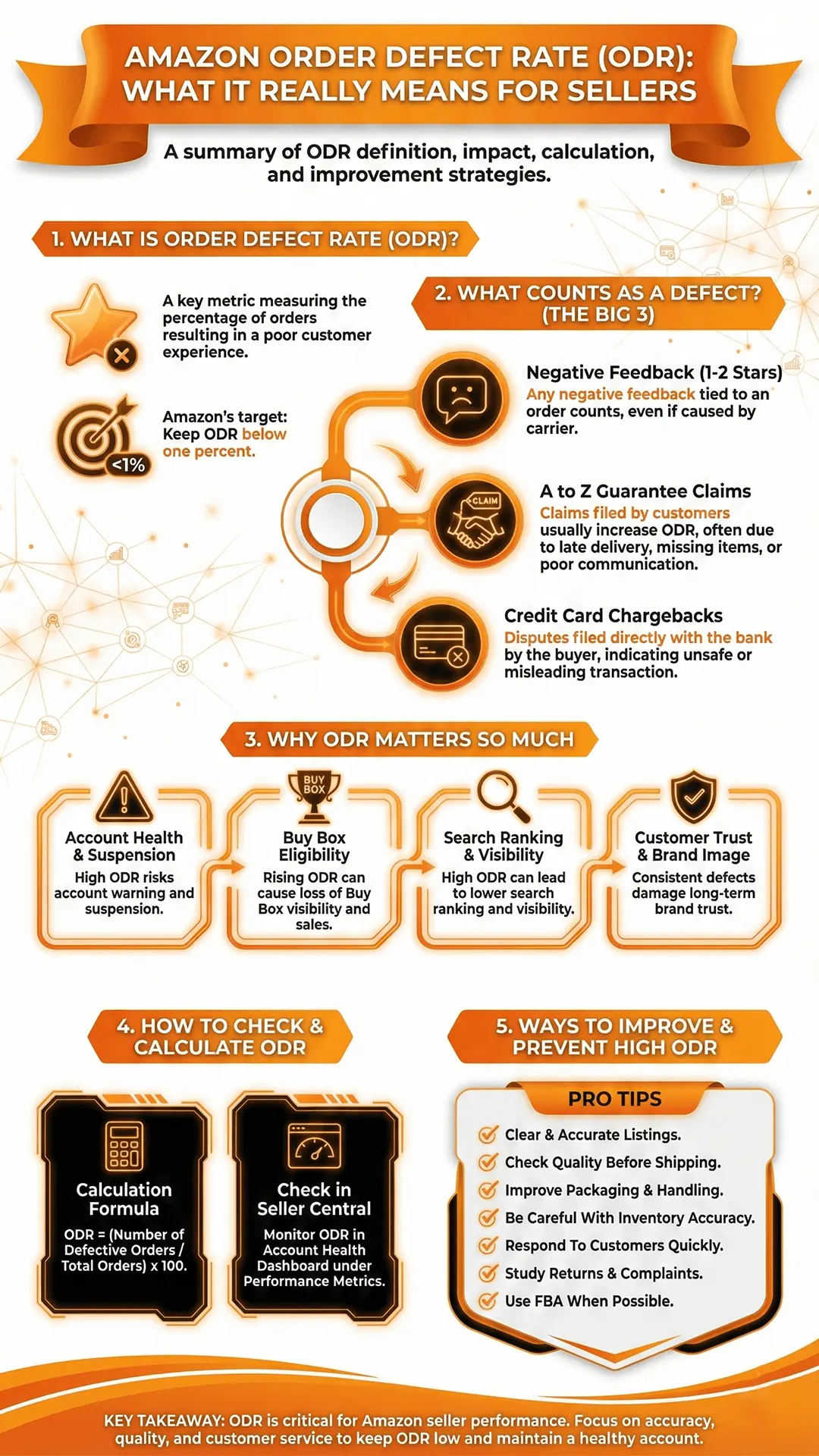
Order Defect Rate, commonly called ODR, is one of the most important performance metrics for Amazon sellers. It measures how many of your orders resulted in a poor customer experience. Amazon treats this metric seriously because it reflects how reliable and trustworthy a seller is. When the numbers go above Amazon’s target, the account can face warnings, listing restrictions, or in more serious cases, suspension.
ODR is calculated by dividing the number of defective orders by the total number of orders within the evaluation period. A defective order is any order that creates a negative customer outcome. Amazon uses this metric to protect buyers and maintain marketplace quality, so keeping your ODR under control is a major part of running a stable Amazon business.
Amazon’s performance standard for ODR is simple. Sellers must maintain an Order Defect Rate below one percent. When ODR gets close to or crosses that number, Amazon views the account as risky and steps in quickly.
For ODR suspensions Amazon Account Reinstatement Service can help reinstate your account.
What Counts as a Defect in ODR
Amazon uses three main elements to determine whether an order is defective. Each carries significant weight because these issues often show that the customer had a poor experience.
Negative Feedback
Any one or two star feedback tied to an order counts as a defect. Even if the issue was caused by a carrier or misunderstanding, Amazon often includes the feedback unless it clearly violates their feedback rules.
A to Z Guarantee Claims
When a customer files an A to Z claim, it almost always increases your ODR. Claims usually happen because of late delivery, missing items, damaged products, or poor communication. Winning the claim helps, but ideally you want to prevent them from happening in the first place.
Credit Card Chargebacks
When a customer disputes the charge directly through their bank, Amazon marks the order as defective. Chargebacks are rare but serious because they show the buyer felt the transaction was unsafe or misleading.
These three issues have the strongest impact on your order defect rate. Even a single defect can push ODR up if your order volume is low.
Why Order Defect Rate Matters So Much
ODR is more than a performance number. It affects nearly every part of your Amazon business. When Amazon notices defects increasing, they take action because poor customer outcomes affect buyer trust and marketplace stability.
Account Health and Suspension Risk
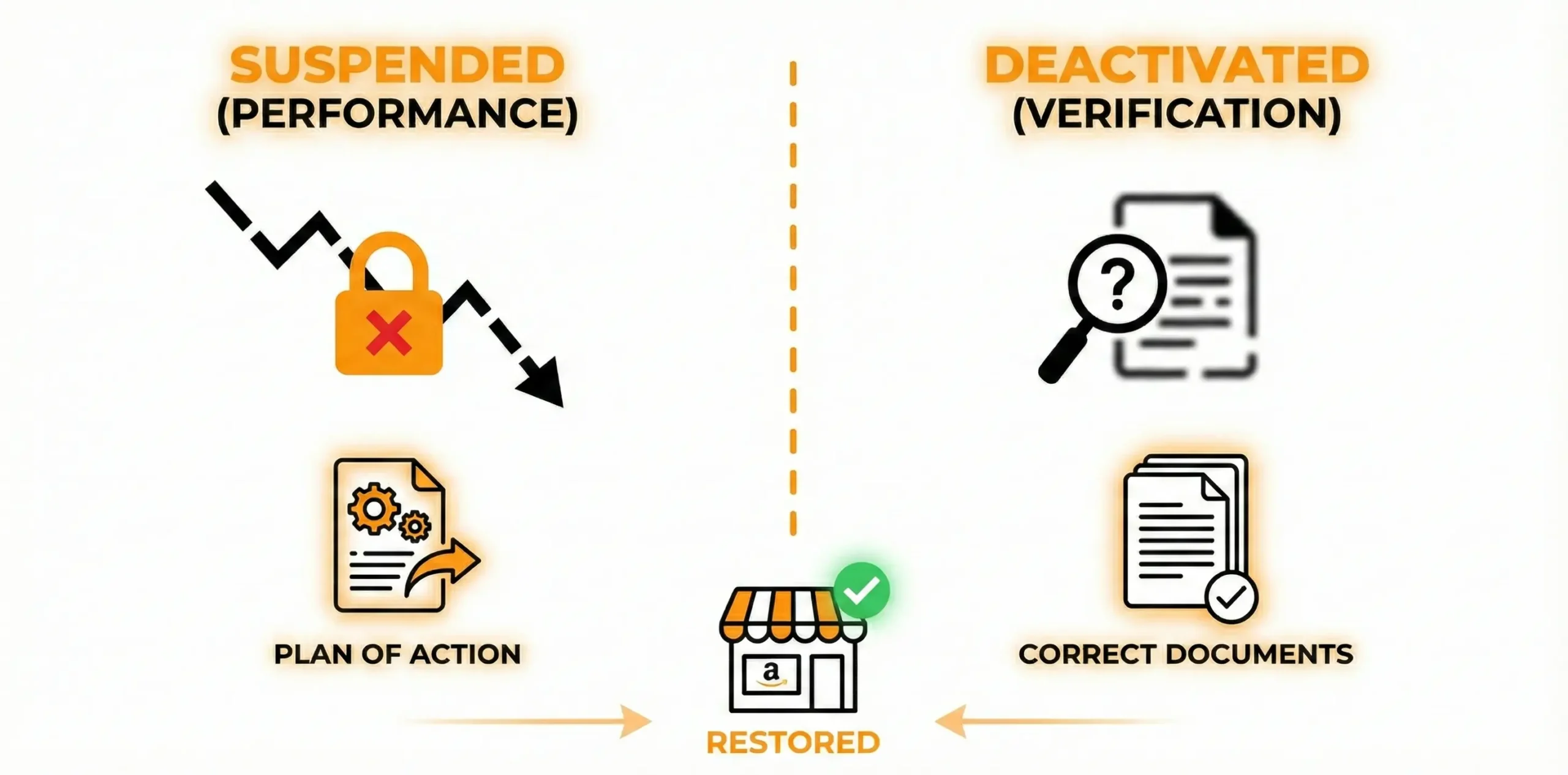
A high ODR is one of the fastest ways to receive an account at risk notice. If your ODR stays high or increases over time, Amazon can deactivate your listings or suspend your selling privileges until you fix the underlying issues.
Buy Box Eligibility
Buy Box placement depends partly on seller performance. Even a small rise in ODR can cause you to lose Buy Box visibility. Without the Buy Box, sales usually drop dramatically, which makes recovery harder.
Search Ranking and Visibility
Amazon’s search algorithm considers seller performance. A high ODR tells Amazon that your customer experience is inconsistent. As a result, your listings may appear lower in search results, even if the products are competitive.
Customer Trust and Brand Image
ODR is not just an Amazon metric. Customers pay attention to reviews, product quality, and reliability. Consistent defects can damage long term trust in your brand and lower repeat purchase rates.
How Amazon Calculates Order Defect Rate
Understanding the calculation helps you see where problems are coming from. The formula is simple:
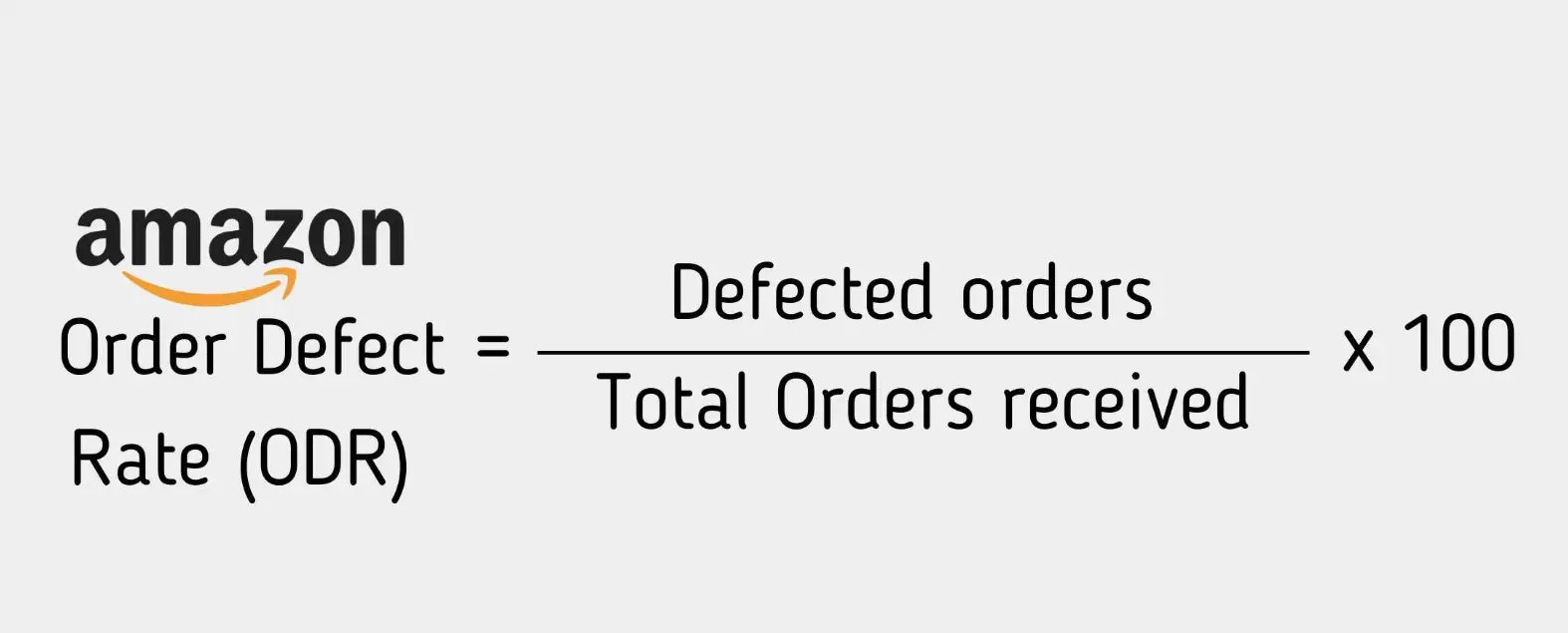
Number of defective orders divided by total orders, then multiplied by one hundred. Amazon usually measures ODR over a set evaluation period, often sixty or ninety days depending on the account.
Not every return counts as a defect. Only orders linked to negative feedback, A to Z claims, or chargebacks affect your ODR. This is helpful because not every unhappy buyer impacts your performance score. You should still treat returns seriously, but it helps to know that returns alone do not damage ODR.
How to Check Your Order Defect Rate in Seller Central
You can monitor ODR easily in your account health dashboard. Amazon updates it regularly and highlights any defects that were added to your score. This helps you track issues early before they become a larger problem.
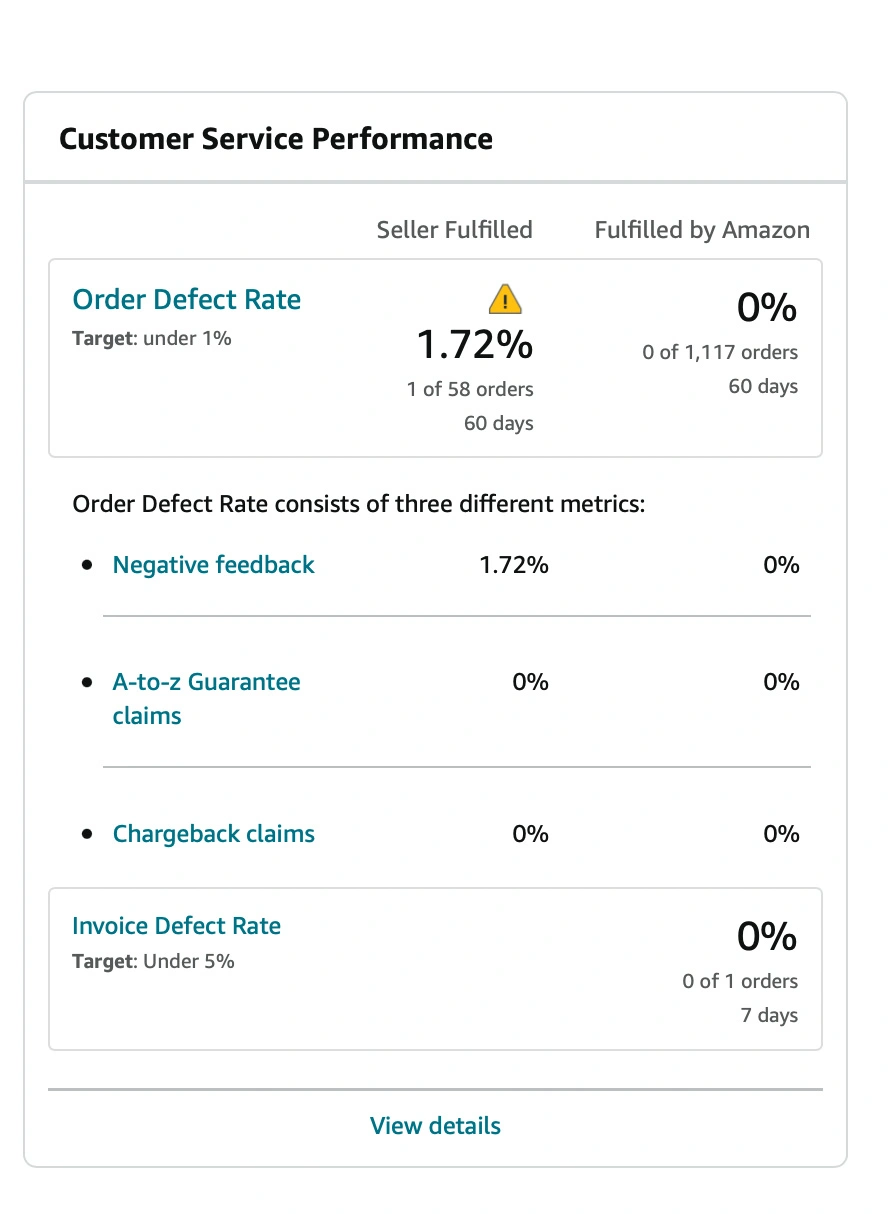
You can also view your ODR under the performance metrics section. The dashboard breaks down the exact percentage, the number of defects, and which orders contributed to the problem. Reviewing this information helps you understand patterns and identify specific products or listing issues that need attention.
When you check your ODR often, you can catch problems early. Many sellers only notice ODR when Amazon sends a warning. By that point, it becomes harder to recover quickly. Monitoring regularly allows you to fix issues before they reach the one percent threshold.
What Causes a High Order Defect Rate
A rise in ODR usually comes from a few consistent issues. These problems can show up in listing accuracy, product handling, shipping, quality control, or how customer messages are managed. Understanding these causes helps you fix them quickly before they harm your entire account.
Inaccurate or Misleading Product Listings
A product listing that does not match what customers receive is one of the fastest ways to create defects. If the images, variations, or descriptions do not represent the real item, customers feel misled. This often leads to negative feedback or A to Z claims. Even small inconsistencies such as missing features, unclear sizing, or outdated photos can trigger complaints.
Poor Product Quality or Missing Items
When customers receive defective products, items with damage, or incomplete packages, they usually leave negative feedback. This also leads to increased returns and occasional chargebacks. Quality control is important because Amazon tracks these issues closely.
Shipping and Fulfillment Problems
Late deliveries, damaged shipments, or handling errors can push ODR up quickly. These situations often lead to A to Z claims because customers expect on time delivery. If you fulfill orders yourself, even one day of delays or a carrier issue can cause defects to rise.
Inventory Mistakes
Running out of stock, overselling, or shipping the wrong variations creates frustration for buyers. This often leads to cancellations or customer complaints that affect your metrics. Inventory management is one of the easiest ways to prevent ODR problems.
Poor Packaging and Transit Damage
Products that break during shipping often receive negative feedback. Weak packaging, unprotected items, or boxes that do not match the weight of the product can cause damage before reaching the customer.
Slow or Unclear Customer Support
Customers expect quick responses. When support takes too long or gives unclear answers, customers are more likely to file a claim or request a chargeback. Amazon tracks how sellers handle customer messages, and poor service can drive ODR up surprisingly fast.
What Happens When ODR Reaches One Percent
Amazon views anything close to one percent as a sign that something is wrong. Even if the causes are temporary, the system flags the account for further review.
Account at Risk Notices
You may receive messages through Account Health warning that your performance is trending poorly. These messages are early signals that Amazon wants you to correct issues before they escalate.
Loss of Buy Box
When ODR rises, your Buy Box visibility drops. Losing the Buy Box can reduce sales instantly because most customers purchase the default offer. Even if you have strong pricing, Amazon will not award the Buy Box if your performance looks unstable.
Listing Deactivation
Amazon may remove specific ASINs if they receive repeated complaints. This happens often with items that generate negative feedback or A to Z claims.
Account Suspension
If ODR remains above one percent for too long or continues increasing, the account can be suspended. Once suspended, you must submit a detailed plan that explains what caused the issue and how you corrected it.
Long Term Monitoring
Amazon may place the account under tighter performance monitoring. This means even small problems in the future can trigger faster warnings or restrictions.
How ODR Affects Your Amazon SEO and Sales Performance
ODR influences listing exposure, search ranking, and even advertising results. Amazon wants customers to trust the products they see, so performance metrics directly affect visibility.
Lower Search Ranking
Listings from sellers with rising ODR often appear lower in search results. Amazon pushes reliable sellers higher because they provide better customer experiences. A lower ranking means fewer impressions and fewer opportunities to convert shoppers.
Reduced Conversion Rates
When negative feedback appears on listings, customers hesitate to buy. This lowers conversion rates and tells Amazon that the product is not performing well.
Higher Advertising Costs
If your listing struggles with ODR issues, advertising becomes less effective. The same ads cost more to achieve the same results because customers convert at a lower rate.
Impact on Brand Trust
Customer reviews are one of the strongest signals of quality. When ODR rises, negative reviews increase, damaging long term trust in your brand.
The Risks for Low Volume Sellers
Small sellers are affected more severely by ODR because fewer orders make each defect count more. One A to Z claim or one chargeback in a month with low sales can push ODR above one percent almost instantly. This makes it important for smaller sellers to maintain strong quality control and proactive support.
Amazon evaluates all sellers by the same ODR threshold, so low volume sellers must pay closer attention to every order.
Simple Ways To Bring Your Order Defect Rate Down
Most sellers improve their ODR by focusing on the areas that directly shape customer experience. When small issues are fixed early, complaints and claims drop naturally. The goal is not to chase the metric, but to make sure your customers receive exactly what they expected.
Make Your Listings Clear and Accurate
Start with the listing. Many defects come from confusion about the product. Update photos, simplify descriptions, and remove anything that could create wrong expectations. If customers feel surprised when they open the box, your ODR will almost always reflect that.
Check Product Quality Before It Ships
Look at the condition of your items when you receive them from suppliers. If anything looks inconsistent, sort it out before it ever reaches a buyer. Small changes in quality can create a wave of negative feedback. A short inspection process helps prevent surprises later.
Improve Packaging and Handling
A lot of ODR problems begin during transit. Fragile products need extra padding. Heavy products need stronger boxes. Some items need simple instructions printed and placed on top. When packaging is done well, returns and complaints drop quickly.
Be Careful With Inventory Accuracy
Overselling or sending the wrong variation can frustrate customers. Make sure your stock count matches what is listed. If you see inventory moving fast, update numbers early. Inventory mistakes are one of the easiest defects to prevent.
Respond To Customers Quickly
Most customers reach out before leaving a complaint. A quick and clear reply can stop a claim from happening. Even if the answer is short, it shows you care and reduces the chance of a dispute.
Study Your Returns and Complaints
Returns usually tell a story. If the same reason appears again and again, it is a sign something in the listing, quality, or packaging needs attention. Fixing one small detail can sometimes improve your entire ODR trend.
Use FBA When Possible
If managing shipping is difficult, FBA is a good option. Amazon handles delivery and support, which often leads to fewer claims. This does not solve every issue, but it reduces many operational risks.
Stronger Long Term Methods To Prevent ODR Problems
Some sellers maintain excellent ODR because they have a routine that catches issues early. These practices make a big difference over time.
Create a Simple Quality Checklist
Even a short checklist before packing orders helps avoid problems. Look for damage, missing parts, and packaging issues. These small checks reduce negative feedback significantly.
Get Ready for Busy Seasons Early
Sales spikes during holidays often create mistakes. Prepare extra stock, sturdier packaging, and better workflow before the rush begins. Many defects appear when sellers are overwhelmed.
Watch Return Reasons Weekly
Returns reveal patterns before ODR rises. A five minute review each week helps you catch problems early. When you fix issues quickly, fewer problems escalate into claims.
Use Tracking on Every Order
Clear tracking helps customers feel confident about their delivery. It also protects you if a buyer claims the item never arrived. Many A to Z claims happen because customers could not see shipment updates.
Set Up an Internal Reminder for ODR
Check your Order Defect Rate regularly. Even a small rise is worth investigating. Sellers who react early almost always avoid suspension or Buy Box loss.
What Is Considered a Strong Order Defect Rate
Amazon wants sellers to stay under one percent. But the best performing sellers usually keep their ODR below half a percent. It shows consistency and reliability, which helps build trust with both Amazon and customers. Staying far below the one percent threshold gives you breathing room if issues appear later.
Different categories face different challenges, but the target never changes. Amazon expects every seller to protect the customer experience, no matter the category.
How ODR Affects Your Amazon Ranking and Sales
ODR influences your visibility on Amazon more than most sellers realize. When ODR rises, Amazon becomes hesitant to push your listings.
Here is what usually happens:
- Your Buy Box share drops
- Your listing appears lower in search results
- Ad performance declines because fewer customers trust the listing
- Conversion rates fall, creating a cycle that affects ranking even more
A low ODR helps maintain strong visibility and keeps your ads efficient. It also builds a better reputation over time, which supports long term growth.
How AAR Services Helps Sellers Stabilize ODR
If your ODR is rising or you received warnings from Amazon, AAR Services can help you recover quickly. We look at the way your listings, operations, and fulfillment work, then show you what needs attention.
With our support, sellers receive:
- A full review of their account health
- Listing recommendations to reduce complaints
- Guidance for better packaging and shipment handling
- Insights into repeated return reasons
- Support with negative feedback and A to Z claims
Many sellers reach out when they are unsure what triggered the defects. We help you find the cause, fix the problems, and create a plan that keeps your ODR stable in the future.