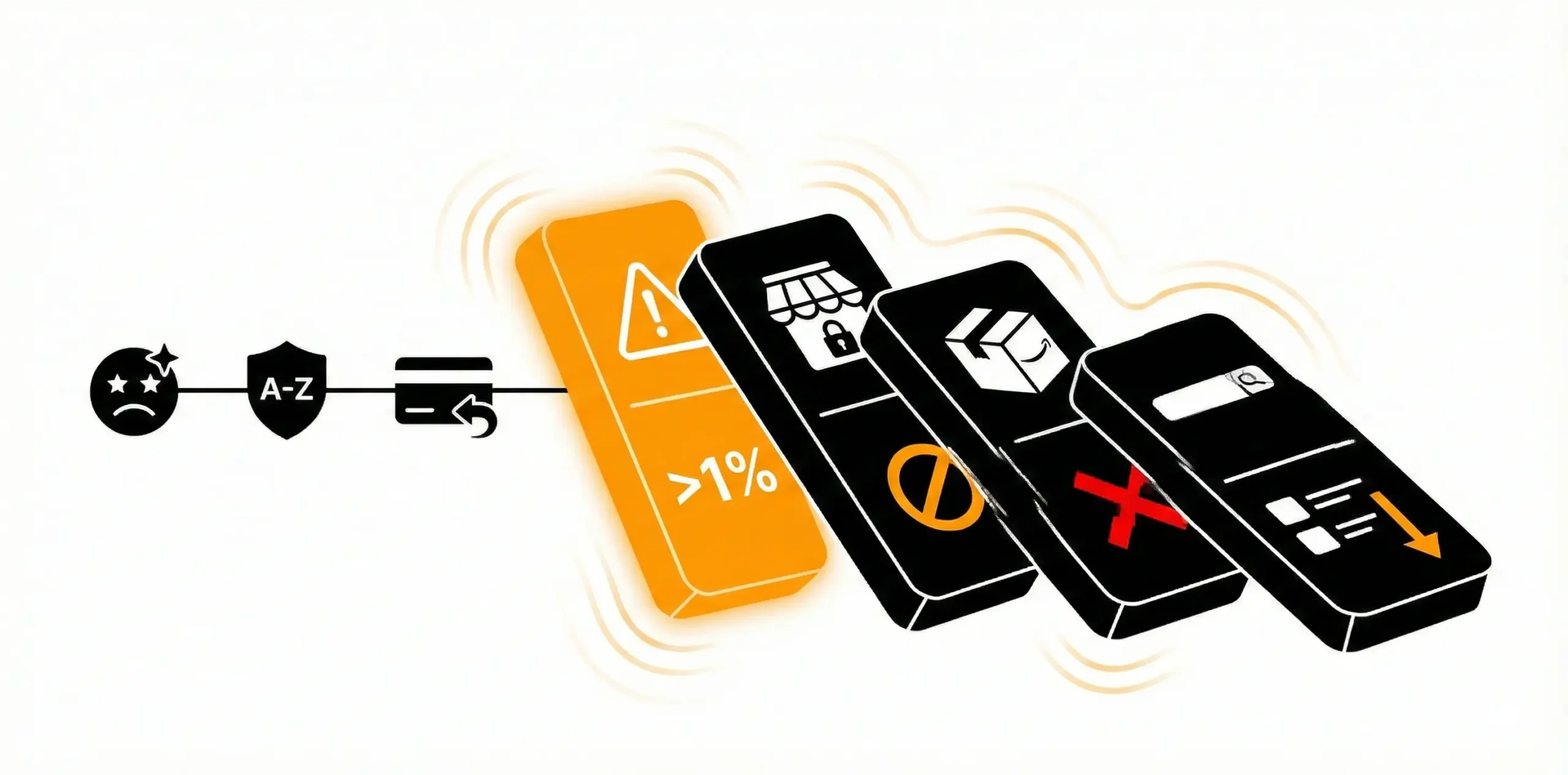
Amazon tracks your performance through a set of important metrics that show how reliable and consistent you are as a seller. These numbers help Amazon decide if your account is healthy, risky, or needs attention. When these metrics drop, your account health score drops with them, and you may end up facing warnings or suspension.
Good performance metrics make your account stronger, improve customer trust, and help you stay in the Buy Box more often. They show Amazon that you can handle orders, returns, tracking, and customer messages the right way. This article from https://www.amazonaccountreinstatementservice.com/ will help you improve your understanding of Metrics that matter to your account.
Why Amazon Seller Performance Metrics Matter
Amazon wants shoppers to have a smooth buying experience, so every metric you see in Seller Central plays a role in measuring reliability. Strong metrics reduce the chances of account deactivation and protect your seller privileges. They also help Amazon decide how your listings rank and how often your products win the Buy Box.
Good metrics also improve the way customers see your brand. When you maintain low defects, fast shipping, and clear communication, you earn better reviews and build long-term trust.
How Metrics Affect Your Account Health
Your account health rating is directly tied to these performance metrics. If your defect rate, late shipment rate, or cancellation rate goes up, you may receive account health warnings or policy flags. Amazon sees this as a risk to buyers.
A healthy account makes it easier to keep selling without interruptions. It also helps you qualify for programs like Amazon Brand Registry, FBA, and higher placement in search results.
How Metrics Impact Search Ranking and Buy Box
High and strong metrics help your listings stay higher in search results. Amazon rewards sellers who deliver timely, respond faster, and maintain low order issues. This boosts your rankings and increases the chances of getting more clicks and sales.
The Buy Box also depends heavily on your performance numbers. Sellers with stable metrics, accurate tracking, and low returns get more Buy Box time than seller who has performance issues.
Why Strong Metrics Lead to Higher Conversion and Customer Trust
When customers see fast delivery, reliable tracking, and positive reviews, they feel safe buying from you. That sense of safety leads to higher conversions and repetitive orders. Good performance metrics also reduce customer complaints, return requests, and negative feedback.
Keeping your metrics stable is not only good for Amazon’s system, but it also helps in long term growth as a seller.
The Core Amazon Seller Performance Metrics
Amazon tracks several key performance metrics to measure how well you handle orders and customer experience. Each metric shows a different part of your business and plays a direct role in your account health rating.
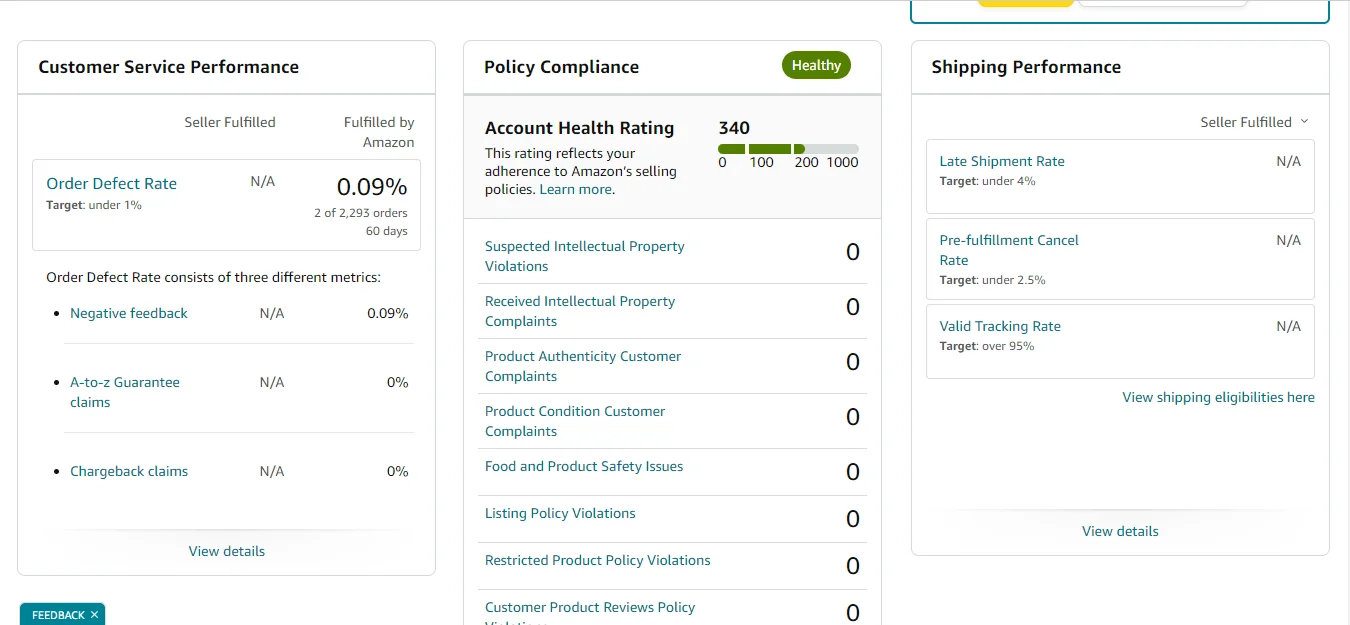
Order Defect Rate (ODR)
ODR is one of the most important metrics. It includes A-to-Z claims, chargebacks, and negative feedback. A high ODR tells Amazon that customers are not satisfied with their orders, which puts your account at risk.
Keeping ODR low helps you stay in good standing and improves your chances of winning the Buy Box.
Late Shipment Rate (LSR)
LSR is a common metric for FBM sellers who don’t have efficient shipping solutions. A high LSR leads to unhappy customers and delivery issues, which Amazon takes seriously. Basically, LSR shows how many orders you shipped after the expected date.
When your shipping is consistent, this metric stays low and your account remains stable.
Cancellation Rate (CR)
High Cancellation Rate creates a poor buying experience and there are chances it can trigger warnings or account evaluations. Amazon always expects sellers to fulfill orders they’re receiving. Basically, the cancellation rate measures how many orders you cancel before shipping.
Accurate inventory and strong order handling help keep your cancellation rate under control.
Valid Tracking Rate (VTR)
VTR proves that customers can follow their package and receive it on time and how many of your order shipments include valid tracking numbers. Low VTR may suggest late shipments or unreliable carriers.
A strong VTR tells Amazon you care about delivery accuracy and customer satisfaction.
On-Time Delivery Rate (OTDR)
This metric shows how often your orders arrive within the expected delivery window. Late deliveries cause negative feedback and reduce trust. Amazon often checks this metric during performance reviews and compliance checks.
Keeping this rate high helps protect your account and improves your overall seller score.
Buyer Seller Contact Response Time (CRT)
CRT measures how quickly you reply to customer messages. Slow or late responses can affect your account health and lead to poor customer experience. Amazon always expects sellers to respond within 24 hours.
Consistent communication builds trust and reduces unnecessary complaints.
How Amazon Evaluates Your Account Health
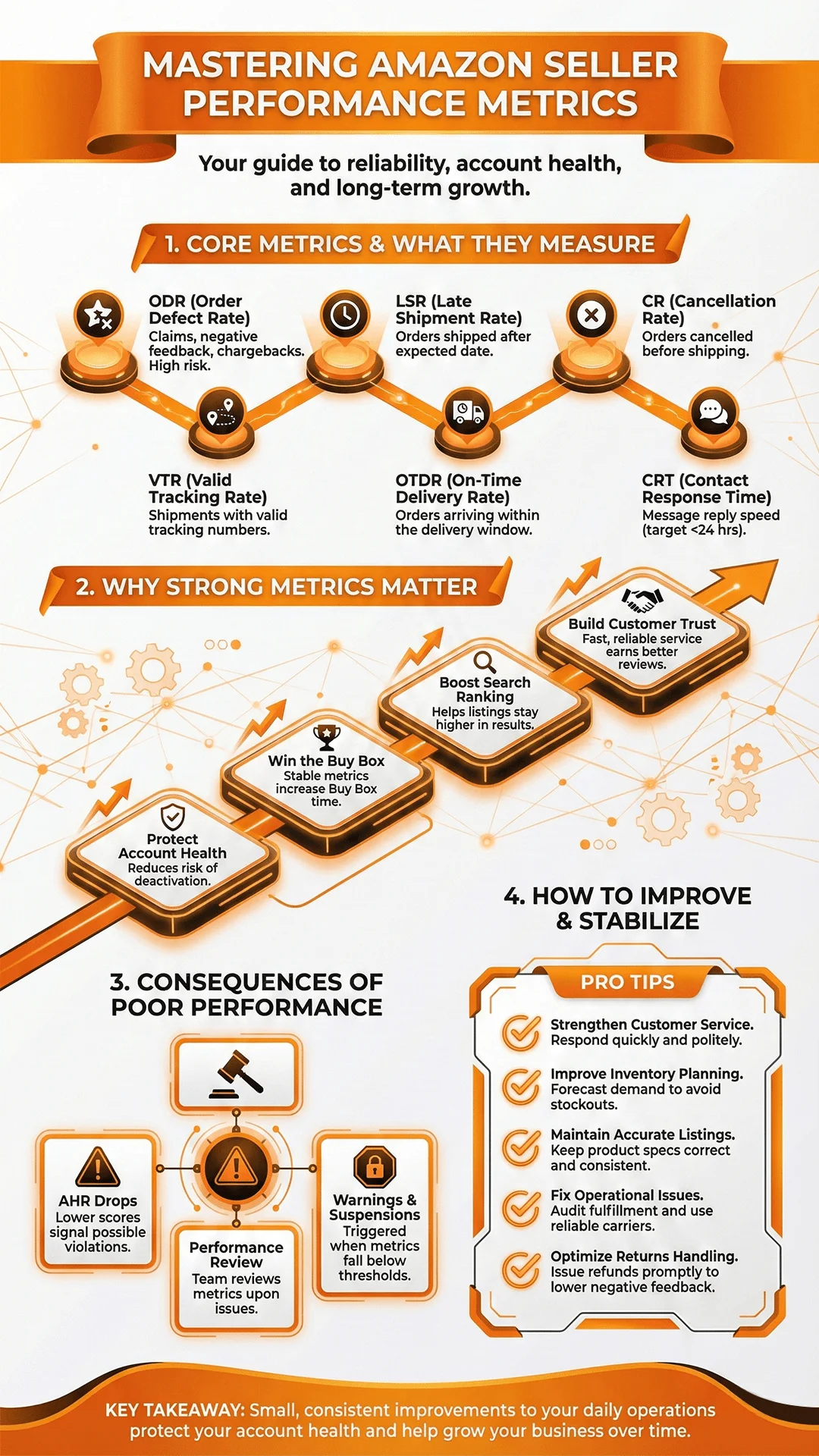
Amazon reviews your performance metrics as a whole, not just one number. If several metrics drop at the same time, your account health rating goes down and you may receive warnings or notifications. Amazon uses these signals to decide whether your account is safe for buyers.
A steady account health score shows Amazon that you handle orders, shipping, and communication with consistency. This lowers your risk of suspension and strengthens your selling privileges.
The Account Health Rating (AHR / AHI)
Amazon uses an account health rating to give sellers a clear view of their risk level. This rating looks at policy compliance, performance issues, and customer complaints. A higher score means you are meeting Amazon’s expectations, while a lower score signals possible violations.
Keeping your AHR stable is one of the best ways to avoid sudden account actions.
How the Seller Performance Team Uses These Metrics
The Seller Performance Team reviews your metrics when they receive a complaint, a policy violation, or a performance issue. They look at your ODR, cancellations, tracking accuracy, and delivery speed to understand how reliable your business is. If your account shows a pattern of problems, they may send a warning or suspend the account.
Clear, consistent metrics make it easier for the team to trust your performance and keep your account active.
What Triggers Warnings, Flags, and Suspensions
Warnings usually happen when one or more metrics fall below Amazon’s required thresholds. Flags may show up when customer complaints increase or when a product receives repeated safety or authenticity concerns. A suspension often happens if multiple issues appear at the same time or if the problem keeps repeating.
Most sellers can prevent these risks by monitoring metrics daily, fixing small issues early, and improving internal processes.
How to Improve Your Amazon Seller Performance Metrics
Improving metrics starts with tracking the right numbers and fixing the weakest links in your operations. Focus on the metrics that hurt your account health first, then work through the rest in order of impact. Small, consistent fixes usually beat big, rushed changes.
Strengthen Customer Service & Response Times
Answer buyer messages quickly and politely. Resolve claims and refunds fast to prevent negative feedback and A-to-Z claims. Good communication reduces complaints and helps your Buyer-Seller Contact Response Time.
Improve Inventory Planning
Avoid stockouts and overstocking by forecasting demand and setting reorder points. Use inventory alerts and restock plans to keep your IPI healthy and reduce cancellation rates. Fewer stock problems mean fewer customer cancellations and better Buy Box chances.
Maintain Accurate and High-Quality Listings
Keep titles, bullet points, images, and product specs correct and consistent. Clear listings reduce returns, negative reviews, and authenticity questions. When product details match the customer expectation, conversion and review scores improve.
Fix Operational Issues That Cause Defects
Look at fulfillment processes that cause late shipments or invalid tracking. Use reliable carriers, confirm labels and packaging, and audit your fulfillment steps regularly. Improving shipping and tracking directly lowers LSR and raises VTR.
Optimize Returns and Refund Handling
Create a simple returns process and issue refunds promptly when appropriate. Faster resolution lowers negative return feedback and decreases ODR. Track return reasons to fix product or listing issues that cause repeated returns.
Track Advertising and Conversion Metrics Together
Use advertising data to spot poor-performing listings or bad traffic. If CTR is low or ACoS is high, test new images, titles, or keywords. Better ads and listing conversion reduce wasted spend and improve total sales metrics.
Best Tools to Track Amazon Seller Performance Metrics
Amazon Seller Central gives you the baseline data you need for everyday monitoring. Add third-party tools for deeper insights like trend analysis, keyword rankings, and detailed inventory forecasts. Use tools that show historical trends, not just daily snapshots.
Recommended Third-Party Tools
Always look for tools that has features like alerts, automated reports, and historical tracking and choose the which covers account health, IPI, Advertising in one dashboard where you don’t miss anything. These type of tools wil help you stayed alert and save you from serious issues.
What to Do If Your Performance Metrics Drop
Act fast. Identify which metric moved and map the likely operational cause. Gather order samples, tracking info, and customer messages to find the pattern. Then correct the process, update the listing or supplier, and document the change.
Steps to Stabilize Performance
- Prioritize the metric with the highest risk to account health.
- Make a concrete fix and document the change.
- Monitor the metric daily and keep records for potential appeals.
- These simple steps reduce the chance of warnings and keep your account in good standing.
When to Consider Professional Help
Hire Professionals if you have repeated suspensions, your multiple account metrics are failling, your business sales are dependent on amazon heavily. AAR Services is a team of professionals who can assist you with escalations to seller performance, help you draft a solid Plan of Action, and audit your account.
Final Thoughts
Amazon seller performance metrics are not just numbers. They reflect how your business operates day to day. Keep your metrics stable with steady processes, good customer care, and regular monitoring. Small, consistent improvements protect your account health and grow your business over time.